
How the catalogue is organised
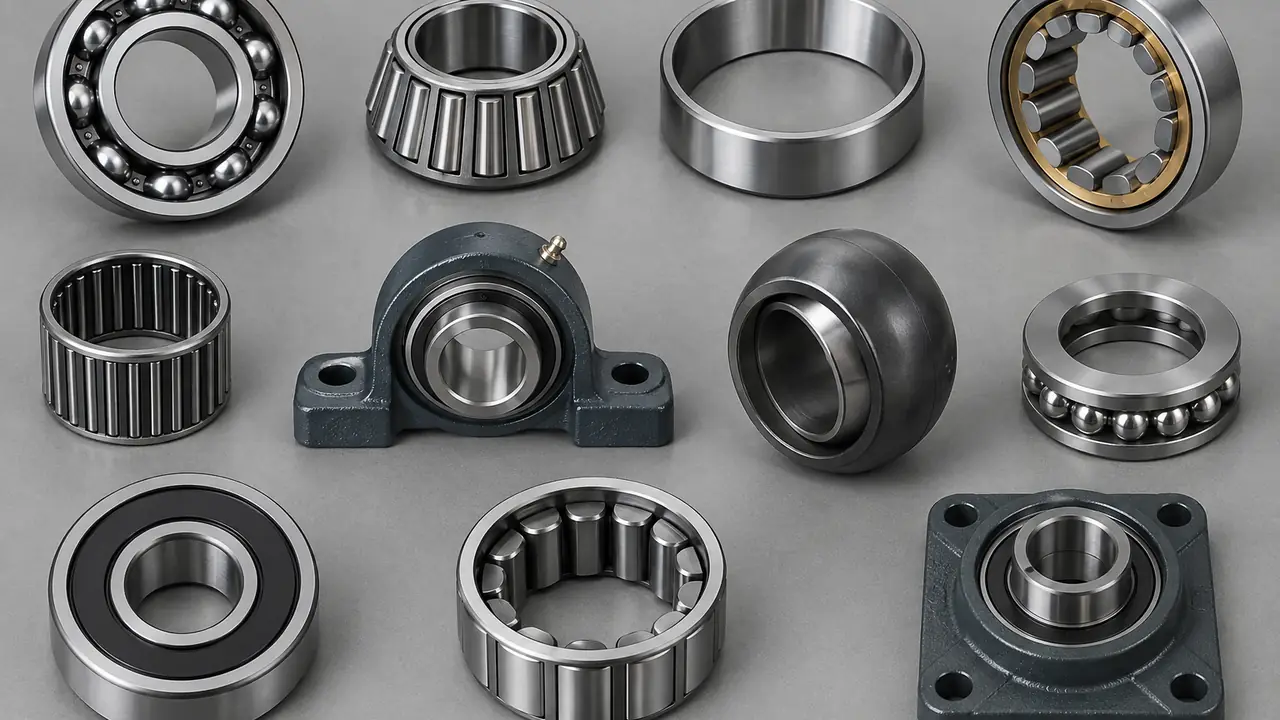
Rolvane groups rolling bearings into five families. The grouping follows how engineers actually choose: first by what the bearing has to carry and how the shaft behaves, then by size and options. Each family page below lists its lines, the common series and the questions a partner plant will ask before it quotes. The hub cards on this page link straight to them.
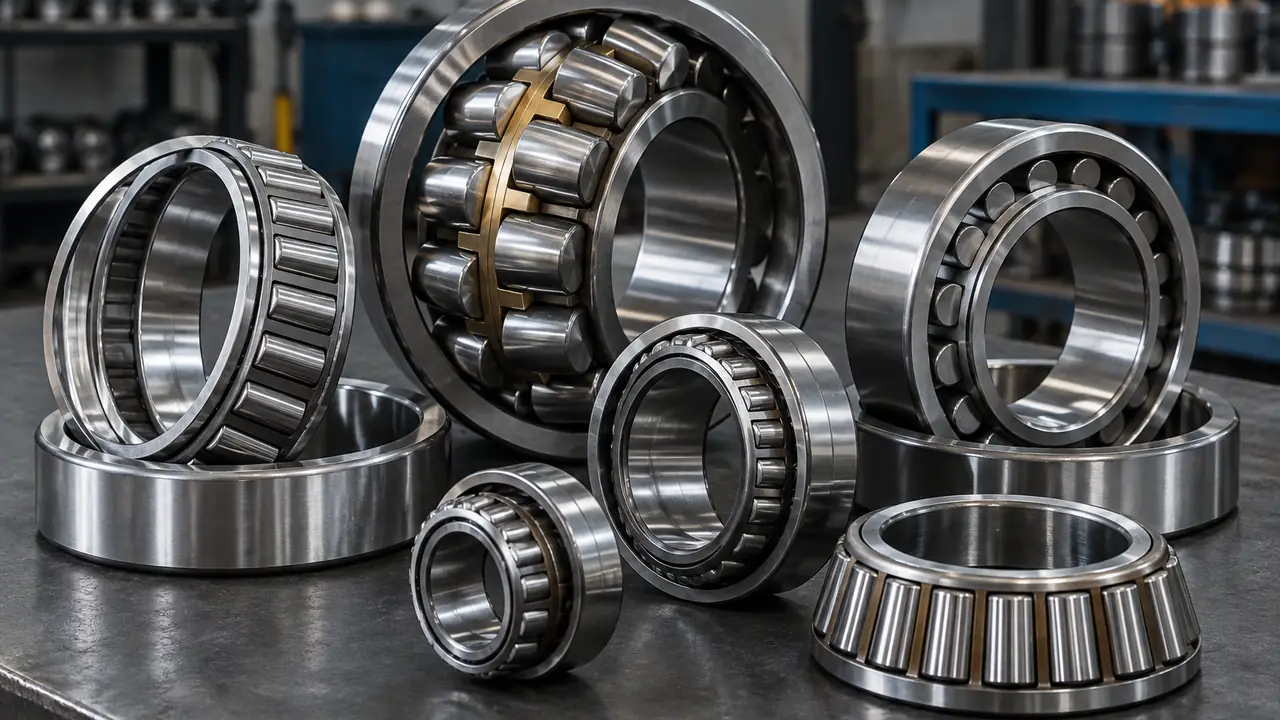
A rolling bearing is a set of rolling elements between two rings, held apart by a cage. The shape of those elements - balls, cylinders, cones, barrels or needles - decides most of what the bearing can and cannot do. Balls touch the raceway at a point, so they run fast and with low friction but carry less. Rollers touch along a line, so they carry far more load in the same envelope but tolerate less speed and less misalignment. If the vocabulary is new, start with bearing types explained.
Choosing a family by four questions
Four questions narrow almost every selection to one or two lines. Answer them in this order.
- Which way does the load act? Purely radial, purely axial, or a combination. This is the first filter and it removes most options.
- How fast does the shaft turn? High speed favours balls and precision angular contact designs; slow, heavy duty favours rollers.
- Can the shaft and housing stay aligned? Long shafts, flexing frames and cast housings often misalign. Self-aligning designs absorb it; rigid designs do not.
- How much room is there? Thin section, needle and miniature designs exist for tight envelopes; heavy roller bearings need a larger cross section.
Selection table
| Situation | Usual choice | Family |
|---|---|---|
| Radial load, moderate axial both ways, high speed | Deep groove ball | Ball |
| Combined load, axial in one direction, precise running | Angular contact ball | Ball |
| Shaft misalignment, light to medium load | Self-aligning ball | Ball |
| High radial load, stiff shaft | Cylindrical roller | Roller |
| Combined radial and axial load, wheel hubs, gearboxes | Tapered roller | Roller |
| Heavy load with misalignment | Spherical roller | Roller |
| Very little radial space | Needle roller | Roller |
| Axial load only, low speed | Thrust ball or thrust roller | Ball or roller |
| Shaft mounted on a frame, dusty field duty | Pillow block | Specialty |
| Wet, corrosive or food environment | Stainless steel | Specialty |
What sits behind the five families
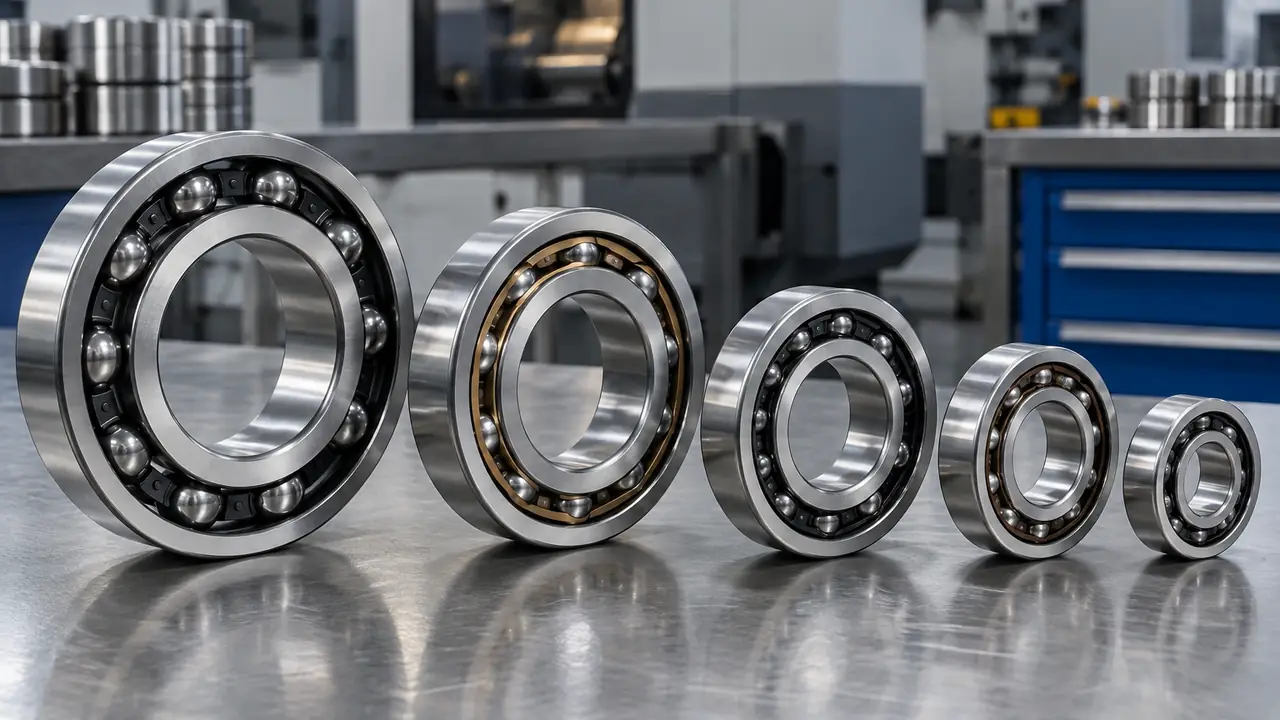
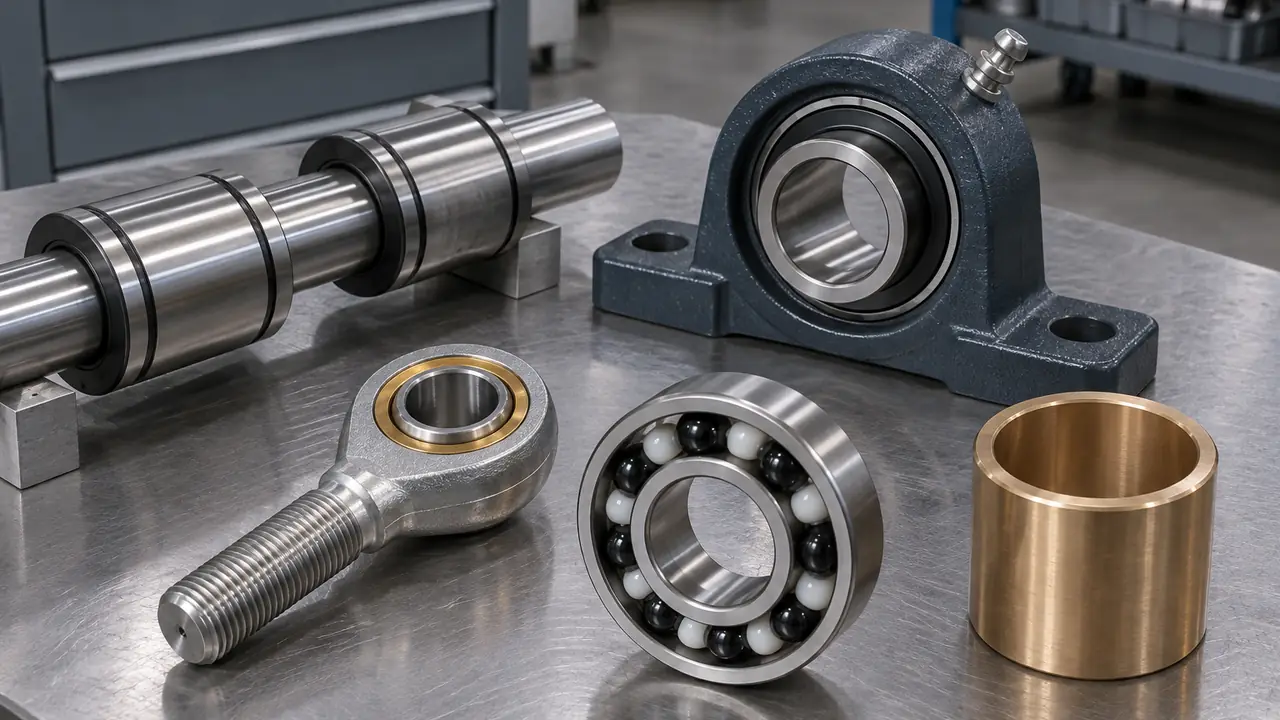
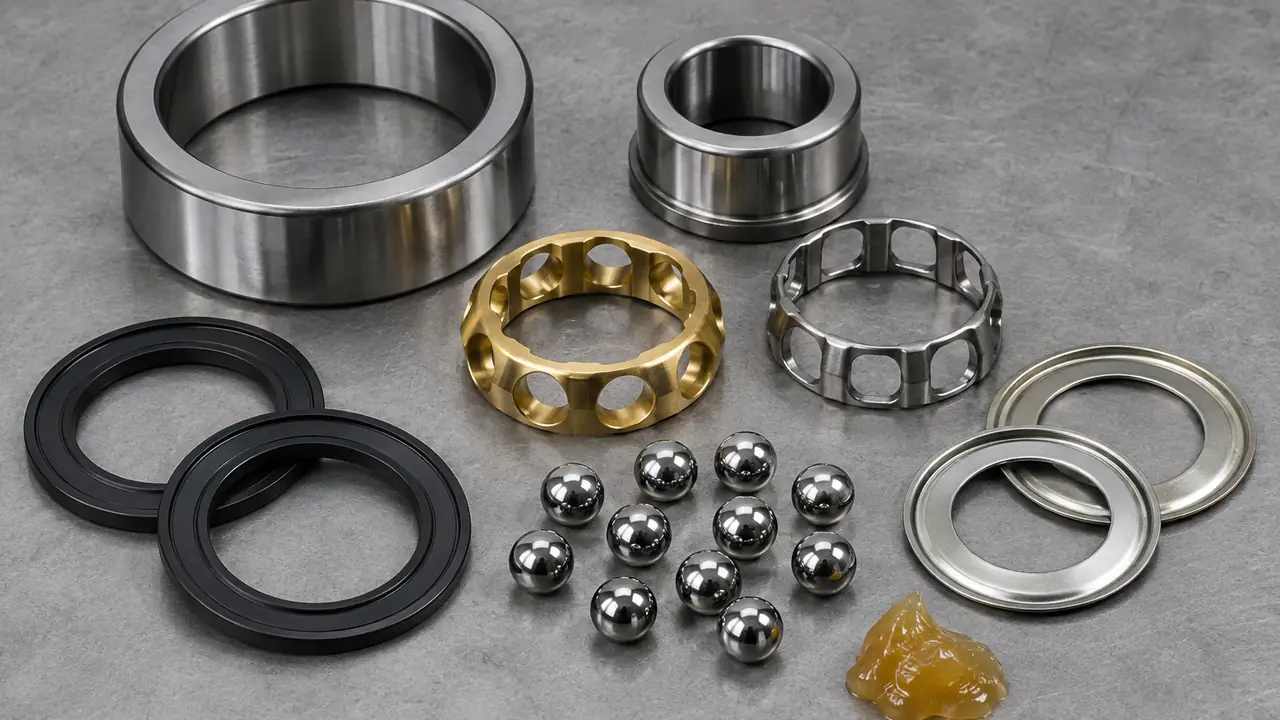
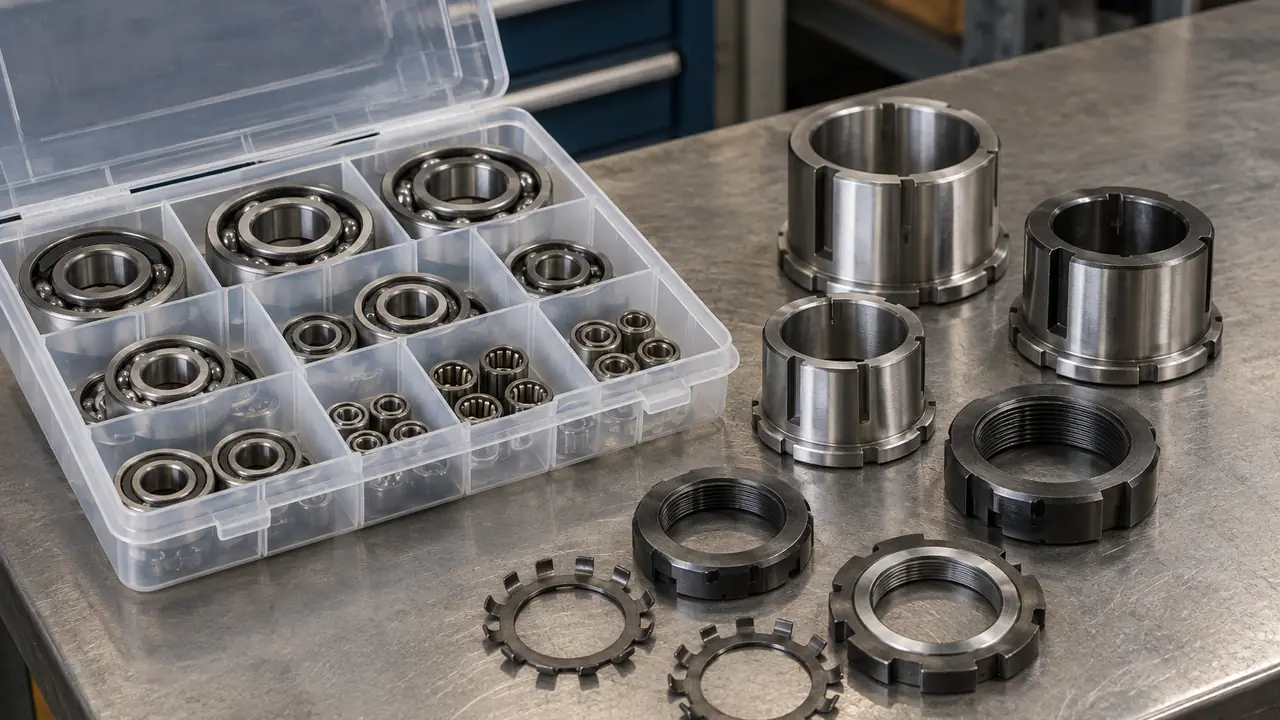
Ball bearings are the volume family: deep groove, angular contact, self-aligning, thrust, miniature and high-speed designs. Roller bearings cover cylindrical, tapered, spherical, thrust roller and needle designs for heavier duty. Specialty bearings are the purpose-built lines: linear, spherical plain, pillow block, plain, stainless, ceramic and wear-resistant. Components and materials include bearing steel, rings, cages, balls, rollers, seals, shields, grease, washers, bushings and housings, for buyers who assemble or repair. Kits and accessories cover repair kits, adapter sleeves, lock nuts and retaining parts.
Many programs mix families. A conveyor builder may need pillow blocks, deep groove inserts and seals in one order; a gearbox maker needs ball and tapered roller bearings together. Keeping them on one list, with one spec sheet per designation, is the reason the desk exists.
Common selection mistakes
Three errors account for most returned lots. The first is choosing by bore alone and discovering that the housing needs a different series. The second is ignoring heat: a motor shaft that runs warm often needs C3 internal clearance rather than normal clearance, and the tolerance and clearance page explains why. The third is leaving the seal unstated, so that an open bearing arrives where a sealed one was expected. Writing the full designation, including suffixes, on the first request avoids all three.
Another quiet mistake is treating a catalogue number as a performance promise. Two bearings with the same number share boundary dimensions, but life depends on steel cleanliness, raceway finish and heat treatment. That is why the desk asks for the application, not just the number, and why samples are checked before a lot is released.
From selection to a quote
Selection gives you a family; ordering needs a designation. If you already have bearing numbers, the designation guide explains the prefixes and suffixes so that seals, clearance and tolerance are written correctly. If you only have a worn part, measure bore, outside diameter and width and look them up in the size chart. Size data on this site is nominal ISO boundary dimensions for reference; confirm against your drawing and the supplier datasheet.
Standard catalogue sizes typically start from 100-500 pieces per designation, with private-label marking and non-standard sizes handled differently. These are typical reference ranges, confirmed in writing for each program; see MOQ and lead time. When the list is ready, send it through the quote form.