
The ball bearing family
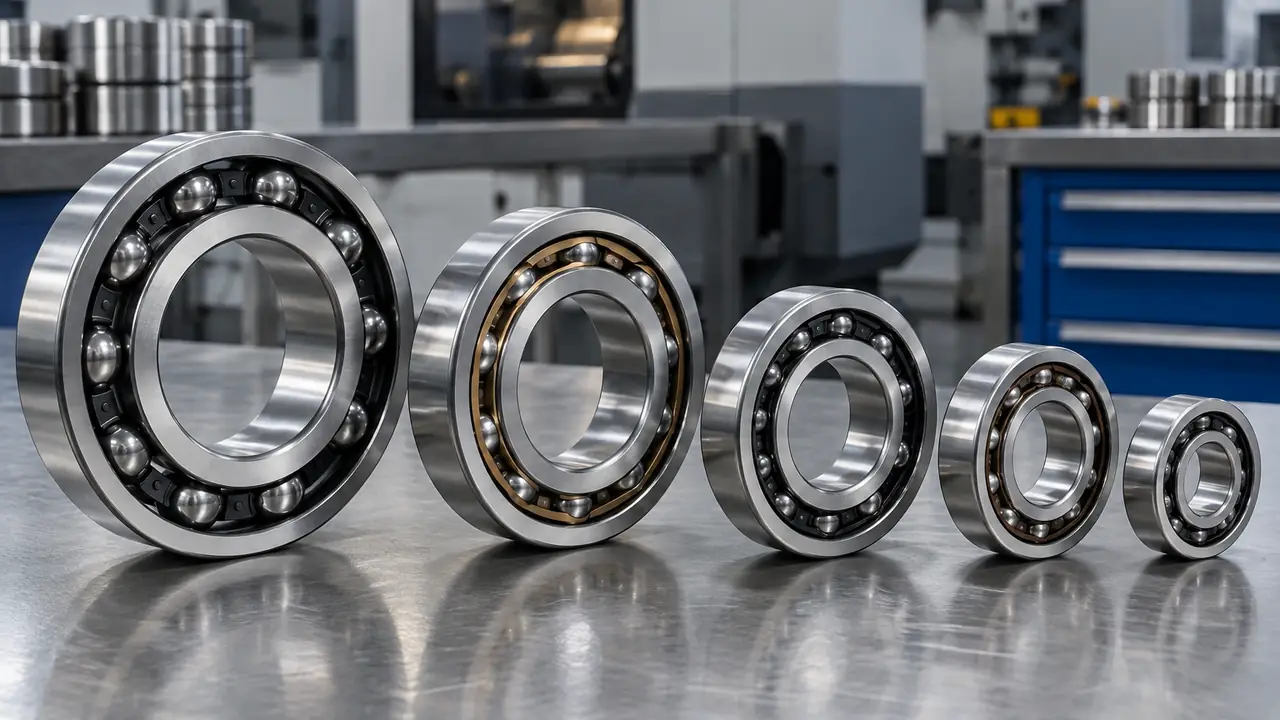
A ball bearing carries load through point contact between steel balls and the raceways of an inner and an outer ring. Point contact keeps friction low, which is why ball bearings are the first choice where speed matters more than raw load capacity. Roller bearings, which use line contact, take heavier loads at the same size; the roller bearings hub covers them. Within ball bearings the differences come down to raceway geometry: how deep the grooves are, whether the contact angle is tilted, and whether the outer raceway is spherical.
Rolvane works as a sourcing desk: it coordinates partner bearing plants in the Chinese clusters, shortlists a plant per project, arranges inspection and organises shipping. The six families below are the ones requested most often by OEM equipment makers, MRO distributors and motor makers.
The six families at a glance
| Family | Typical series | Carries | Pick it when |
|---|---|---|---|
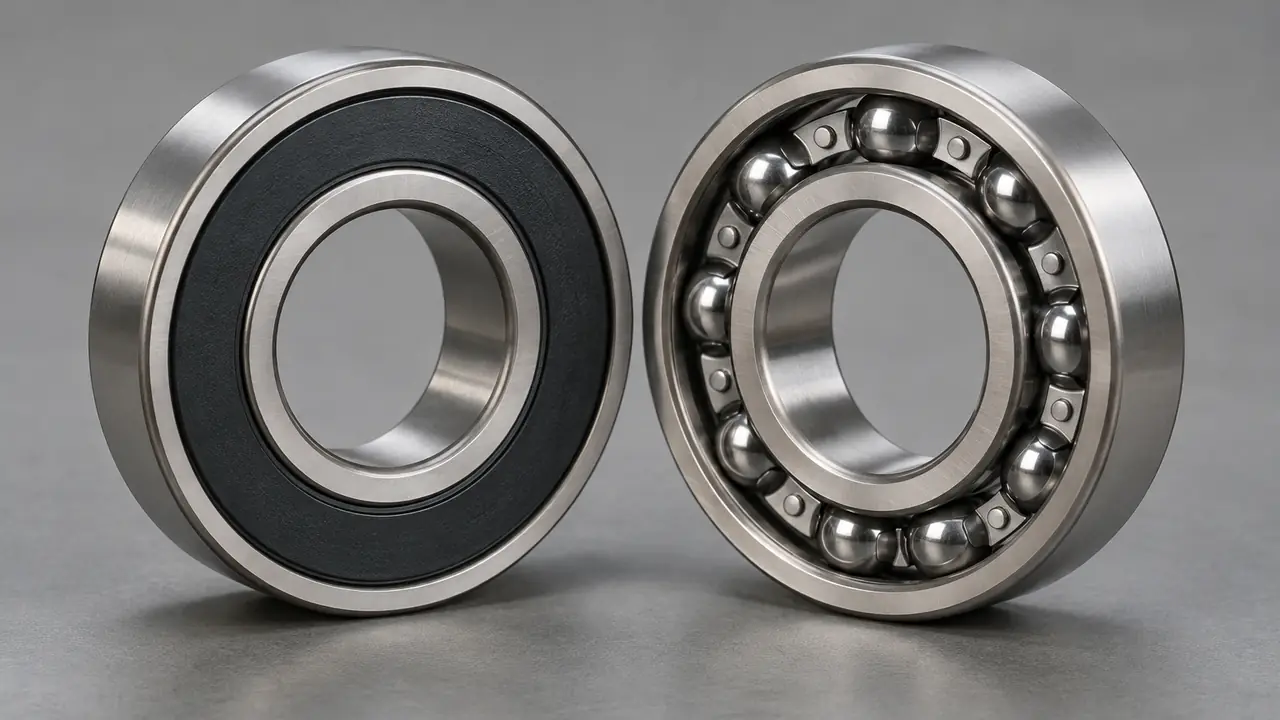
| Deep groove | 60, 62, 63, 68, 69 | Radial plus moderate axial, both directions | General duty, quiet running, low maintenance |
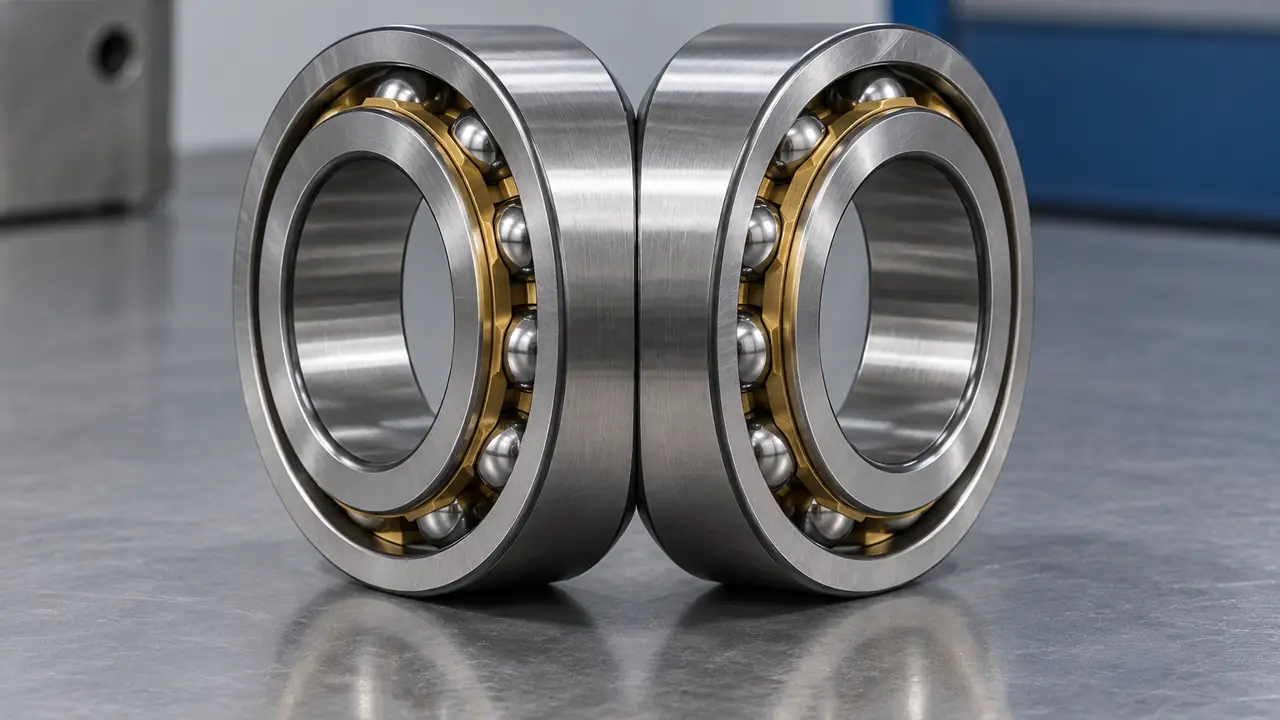
| Angular contact | 70, 72, 73 | Radial plus axial in one direction | Combined load, rigidity, paired mounting |
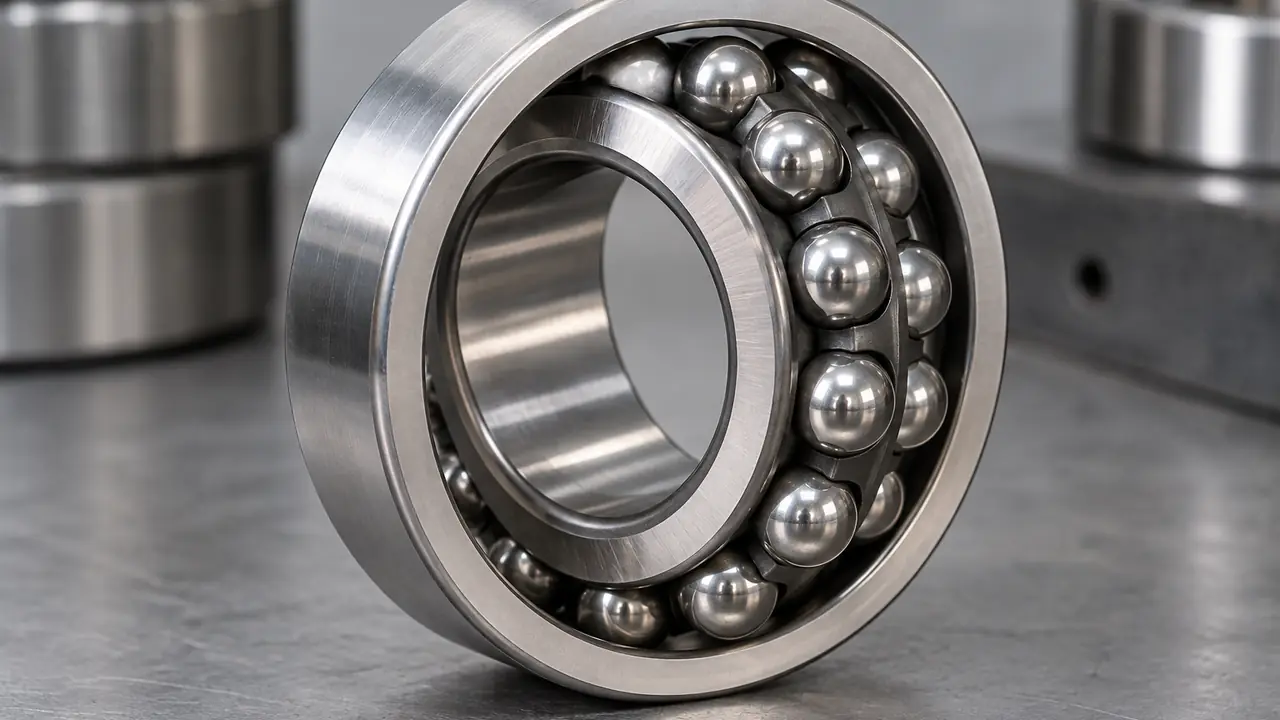
| Self-aligning | 12, 13, 22, 23 | Radial, light axial, tolerates tilt | Shaft deflection or housings that cannot be aligned closely |
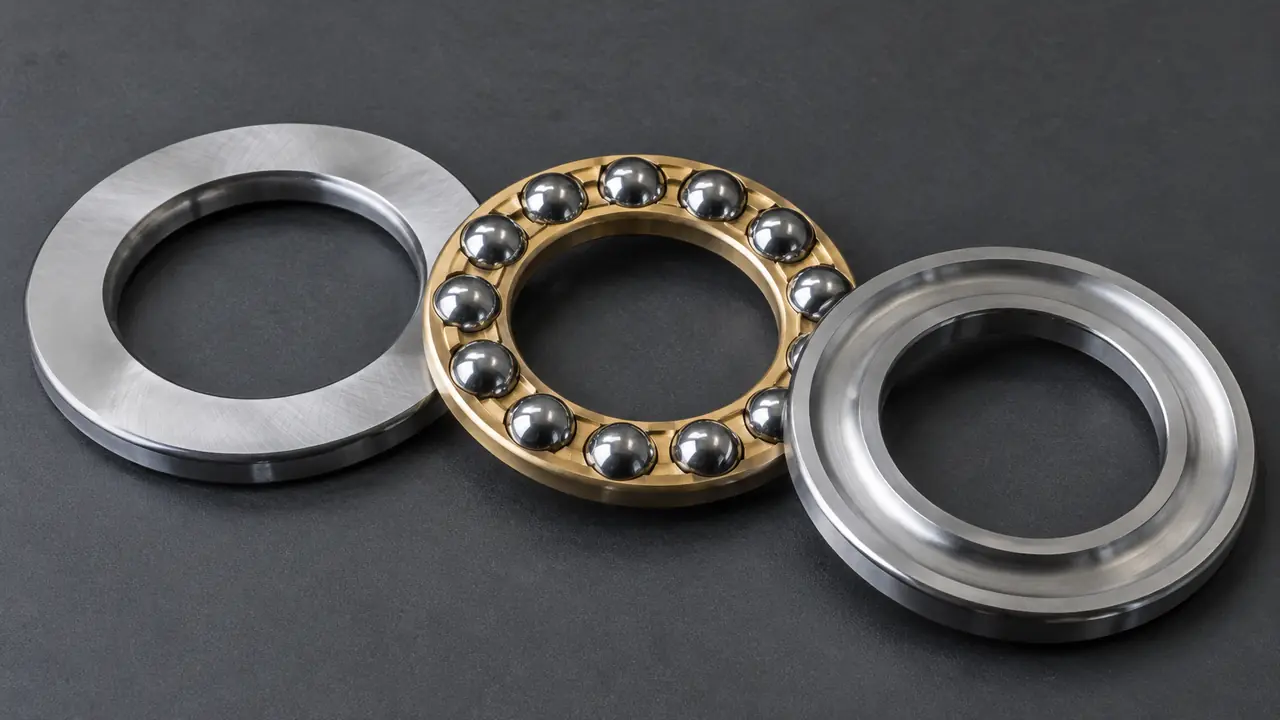
| Thrust | 511, 512, 513 | Axial only | Axial load at low to moderate speed |
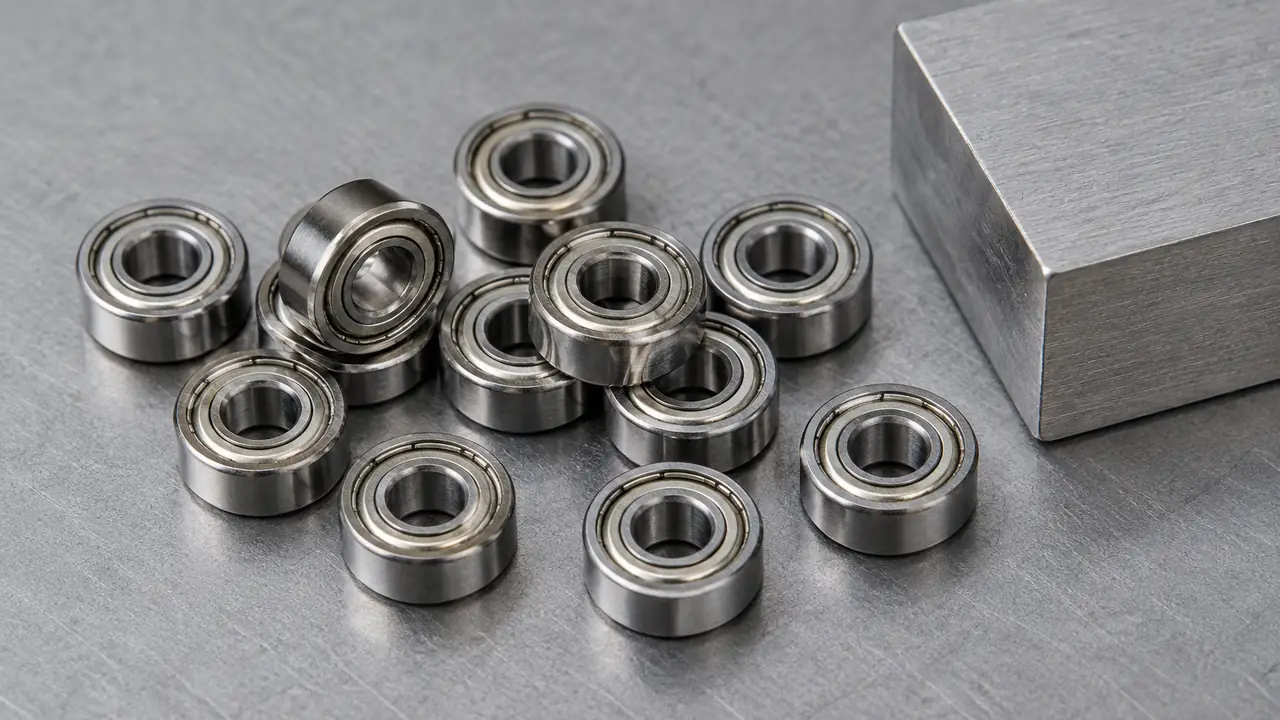
| Miniature | 6xx, 68x, 69x, MR | Light radial and axial | Small bores below about 10 mm |
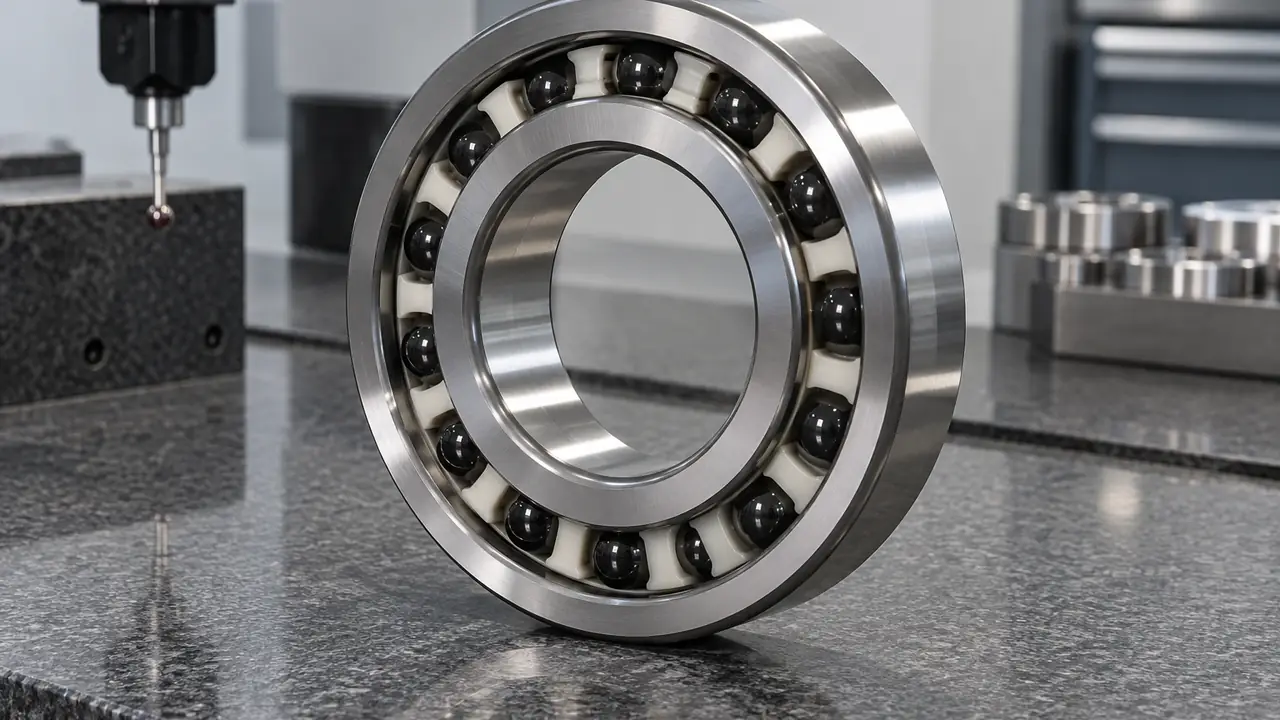
| High-speed | 70xx, 719xx, 72xx precision | Radial plus axial, controlled preload | Spindles and fast, precise rotation |
How to choose between them
Start with the load direction, because it removes most candidates quickly.
- Mostly radial, some axial either way. Deep groove. It has the widest range of sizes, the easiest sourcing in volume and the simplest replacement.
- Significant axial load in one direction together with radial load. Angular contact, usually in a pair. If the axial load reverses, mount two bearings facing opposite ways. A deep groove bearing is not the answer when axial load is the main duty.
- Axial load only. Thrust ball. It needs a separate radial bearing to locate the shaft and a minimum axial load to keep the balls rolling.
- Misalignment between shaft and housing. Self-aligning. Typical in long shafts, agricultural machinery and conveyor drives where frames flex.
- Tiny bores or precision instruments. Miniature. Cleanliness and handling matter more than load.
- Very high rotational speed and stiffness. High-speed precision angular contact, often with ceramic balls and a defined preload.
Speed is the second question. Contact seals, high preload and full ball complements all add heat. Limiting speeds are listed in each supplier datasheet, and the desk checks them against your duty cycle instead of quoting a generic figure. For load-life reasoning, ISO 281 defines the basic rating life method that datasheet values follow.
What to specify on any ball bearing
Whatever the family, quote requests move faster when the same details are stated up front: full designation with suffixes, tolerance class (P0, P6, P5, P4 under ISO 492), internal clearance group such as C3, seal or shield type, cage material, grease and any marking or packaging requirement. The designation guide explains each suffix, and tolerance and clearance shows how the two interact with your fits.
If the application is a replacement and the old part is worn, measure bore, outside diameter and width before assuming the series. Ball bearings with the same bore often exist in three or four series with very different housings.
Sourcing and inspection
Small and medium ball bearings come mainly from eastern Zhejiang and Jiangsu, with precision work concentrated around Luoyang, and steel balls and cages supplied from specialist makers in Shandong. Industry analyses suggest that the five main clusters account for roughly 60 percent of national capacity. The desk selects a plant by tolerance class, vibration grade and quantity, then agrees an inspection plan that covers dimensions, clearance, noise and appearance, with the report supplied for each lot. See the clusters and testing and inspection.
Typical reference ranges: 100-500 pieces per standard designation, 1,000-5,000 for private-label marking, samples in 3-7 working days from stock and 25-45 days for batch production. All are confirmed in writing for each program. Send designations and quantities through the quote form.