
Why kits and accessories are sourced together
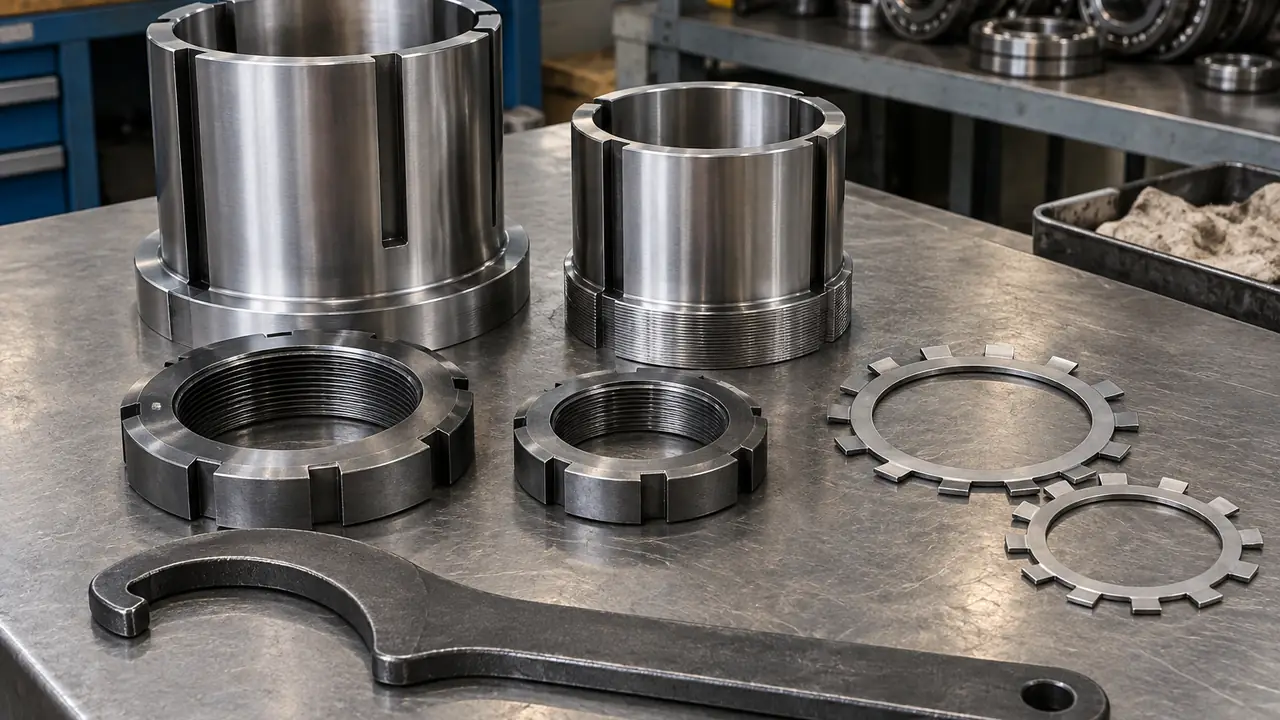
A bearing is only as good as the parts that locate it. A tapered-bore spherical roller bearing needs a sleeve, a nut and a washer before it can sit on a shaft. A wheel hub needs two bearings, a seal and sometimes a circlip before it turns. A maintenance store needs a spread of common sizes in one box so that a failure does not stop a line while someone waits for a single part. These items come from different corners of the supply chain, and they are often ordered late, as an afterthought to the main bearing list. Putting them under one desk means one inquiry, one consolidated shipment and one inspection plan.
Rolvane works as a sourcing desk: it coordinates partner bearing plants and accessory makers in the Chinese clusters, shortlists a source per project, arranges inspection and organises shipping. The desk does not present itself as a single factory, and every quantity and timing below is a typical reference, confirmed in writing for each program.
The two product lines
| Line | What it includes | Typical buyer |
|---|---|---|
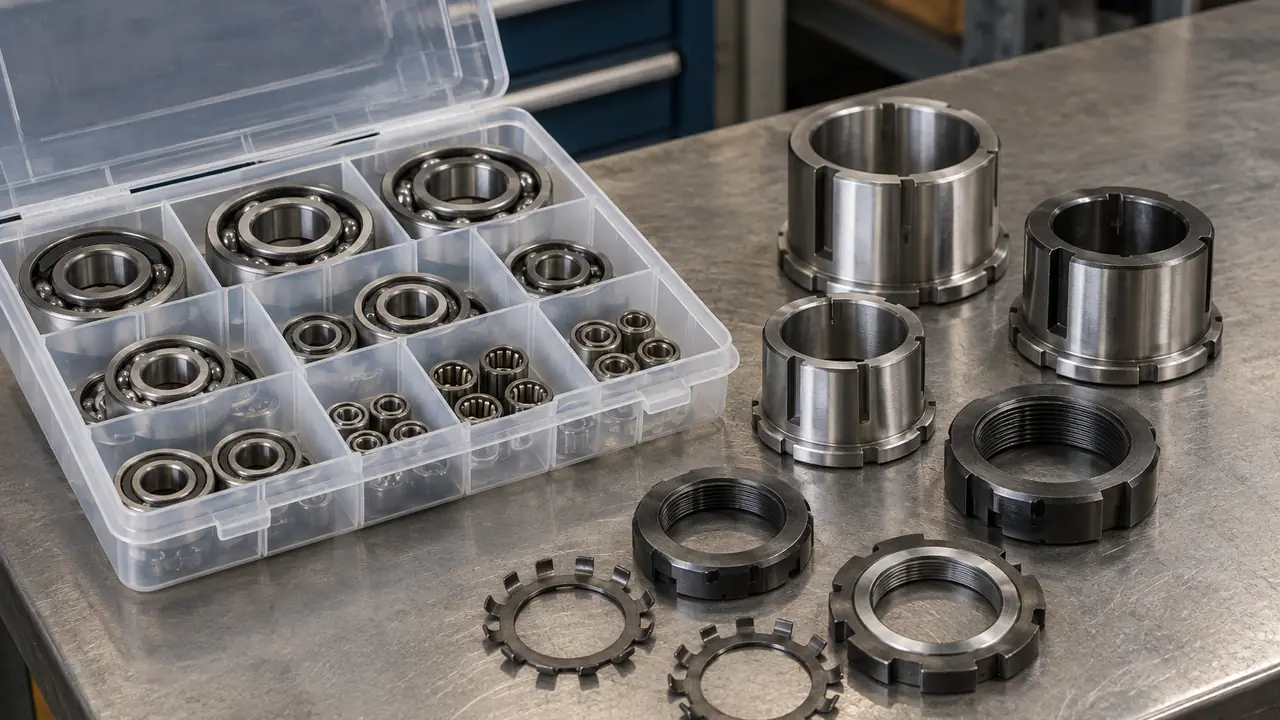
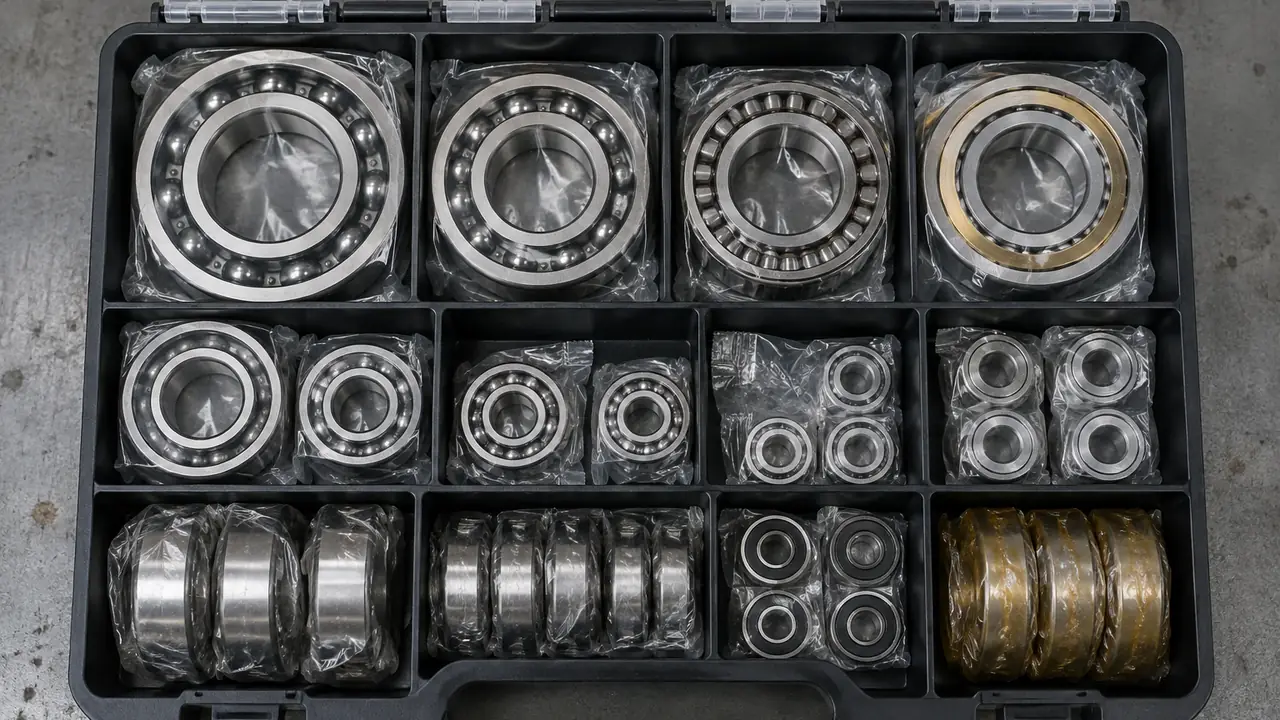
| Bearing kits | Maintenance assortment boxes, wheel and hub kits, repair kits for named equipment, custom-composed kits | MRO distributors, automotive aftermarket, OEM service departments |
| Bearing accessories | Adapter sleeves (H), withdrawal sleeves (AH), lock nuts (KM), lock washers (MB), circlips, grease nipples | Maintenance teams, equipment makers using tapered-bore bearings, distributors |
When to choose a kit and when to choose loose parts
A kit makes sense when the same group of parts is always needed together. A wheel hub repair always takes the same bearing pair and seal; a motor service always uses the same two deep groove sizes. Bundling reduces the chance of a missing part and simplifies stock-keeping. Loose parts make sense when the mix changes often, when quantities differ per part, or when a kit would force you to hold slow-moving items.
- Distributors often use assortments to sell to small workshops that do not want to track dozens of individual numbers.
- OEM service departments use kits per machine model, so a field technician arrives with the right parts first time.
- Automotive aftermarket sellers use wheel and hub kits because the bearing, seal and retaining parts are always replaced together. See the automotive aftermarket solution.
Accessories: small parts with a large effect
Sleeves, nuts and washers look simple, but a wrong match causes real damage. A lock nut that does not match the thread of the sleeve cannot be tightened properly; a washer with the wrong tab count will not lock; a sleeve with the wrong bore will leave the bearing off-centre. For this reason the desk matches accessories by designation to the bearing and shaft, and lists the pairing in the quotation so the match can be checked before ordering. The accessories page explains the pairing logic in detail.
Specification, inspection and packaging
For kits, the contents list is part of the specification: designations, quantities per box, and the order of layout. For accessories, the thread form, material and finish are stated up front. Checks agreed before shipment typically include:
- Contents against the agreed list, counted per box on a sample of boxes.
- Dimensions and thread fit of sleeves, nuts and washers against the drawing.
- Bearing marking, seal fit and rust-protection condition inside each box.
- Box labelling, barcode or part-number print against the approved sample.
Rust protection matters more for kits than for single bearings, because parts sit in a box for months. See packaging and anti-rust for the methods used, and testing and inspection for the lot report.
What to send with a request
A short list is enough to start. Give the designations with suffixes, the quantity per box or per kit, the target market, the packing format you prefer and the expected storage time. If you already sell a kit and want a second source, send a sample or the contents sheet; the desk will compare the parts, not just the box. Photos of the existing label and carton help when the new run should match the old one, and a note on the destination country lets the desk plan labelling and documents early.
Ordering notes
Standard assortments and accessories typically start from 100-500 pieces or boxes per designation; custom-composed kits and private-label boxes usually start around 1,000-5,000 boxes per version. Stock samples ship in 3-7 working days; batch production commonly takes 25-45 days. These are typical reference ranges, confirmed in writing for each program. Details are on MOQ and lead time.