
How bearings travel
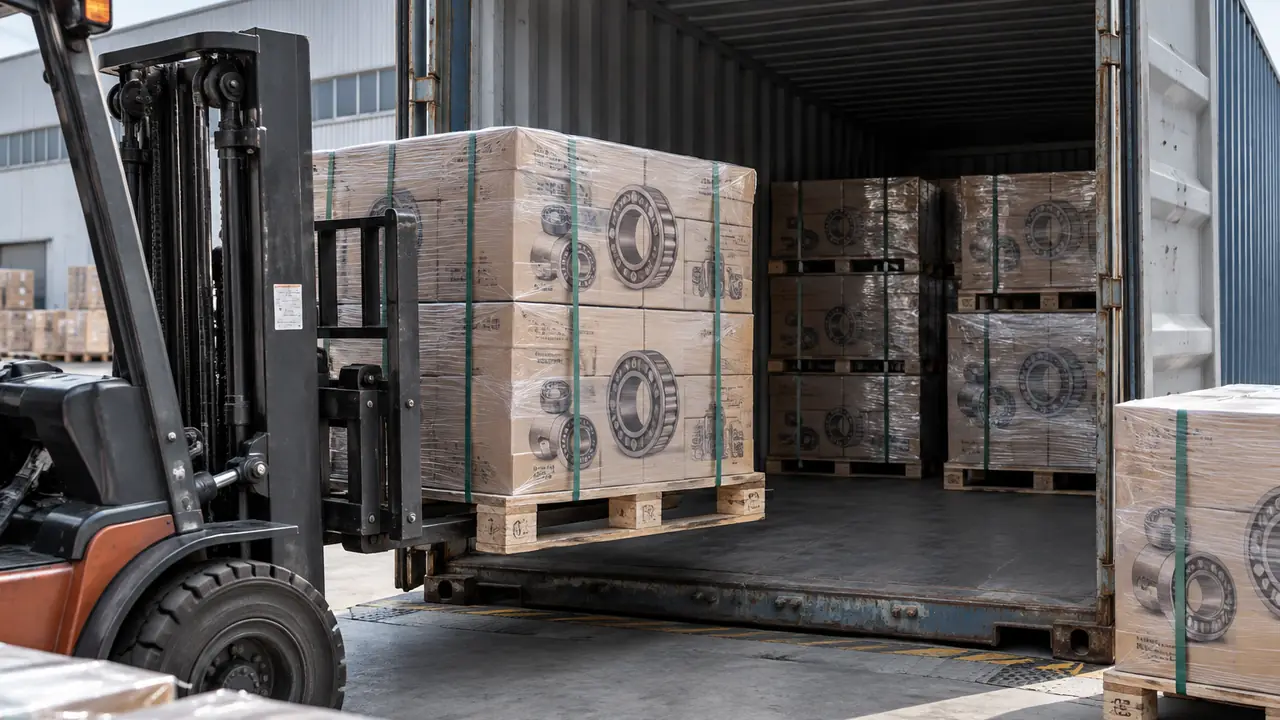
A bearing order is heavy for its value, sensitive to moisture and usually made up of many designations. These three traits shape the shipping plan. Weight pushes larger orders toward sea freight; urgency or small quantities push toward air or express; and moisture sensitivity means every route depends on the anti-rust packing described on the packaging page. Rolvane organises the shipment from partner plants: it consolidates goods when several plants are involved, books the route with a forwarder, and passes the documents on.
Shipping modes and typical transit
| Mode | Typical transit | Best for |
|---|---|---|
| Express courier | 3-7 days | Samples and small urgent parcels |
| Air freight | 5-10 days | Urgent restocking, small pallets, high-value precision bearings |
| Sea freight to US west coast | 15-25 days port to port | Regular volume |
| Sea freight to Europe | 30-45 days port to port | Regular volume |
| Rail (where relevant) | Varies by corridor | Inland Europe and Central Asia routes |
These ranges are typical references and exclude production time, inland trucking, port waiting and customs clearance at destination. The route plan for your order states the expected days and is confirmed in writing; seasonal congestion and carrier schedules can change it.
- Express. Door to door by courier, with tracking. Used for samples and first articles. Weight limits and dangerous-goods rules apply to greased bearings in some cases, so the forwarder checks the pack.
- Air. Chosen for urgency. Cost is driven by chargeable weight, so dense bearings are costly to move this way except in small quantities.
- Sea FCL. A full container loaded at the plant or a nearby warehouse. It suits larger and steady programs, and keeps cartons sealed from origin to destination.
- Sea LCL. Your cartons share a container with other cargo. It suits smaller orders or mixed lists collected from several plants, with an extra consolidation and handling step.
- Rail. An option on some corridors into inland Europe; availability and transit depend on the route.
Incoterms in plain words
Incoterms describe who handles what and where risk passes. The terms below are summarised generically; the order confirmation states the one you choose, and you should check the current Incoterms rules with your forwarder or broker.
| Term | General meaning |
|---|---|
| EXW | Goods are made available at the supplier premises; the buyer arranges nearly everything from there. |
| FOB | The supplier clears goods for export and loads them on the vessel at the named port; the buyer pays main freight. |
| CIF | The supplier pays main freight and minimum insurance to the destination port; risk still passes at loading. |
| DDP | The supplier delivers to the named place with import clearance done; the seller carries import duties and taxes. |
FOB and CIF are the usual terms for container programs. DDP is convenient for small buyers but depends on the destination rules, and the desk checks feasibility country by country before offering it.
Customs heading and documents
Rolling bearings fall under HS heading 8482 in the Harmonized System, with subheadings that separate ball bearings, tapered roller bearings, other roller types and parts. This is general information: the full tariff code in your country, duty rates and any import checks must be confirmed with your customs broker, who sees the exact designation list. A short product description on the invoice that states bearing type and material helps the broker classify correctly.
A usual shipment set includes the commercial invoice, packing list, bill of lading or air waybill, and the certificate of origin when the destination requires one. Test reports, material declarations such as RoHS or REACH statements, and inspection photographs travel with the set if agreed in the program. Documents are prepared from the packing list, which is why the labels in the private label program must match it.
Planning your shipment
Give the desk the destination port or address, the Incoterm you prefer, the target arrival window and any import restrictions you know. Production time comes first: stock items commonly leave within 7-15 working days, and regular batches in 25-45 days, so add transit to those numbers. See MOQ and lead time for the full production ranges, and read sourcing bearings from China for the wider process. All timings here are typical references and are confirmed in writing for each order.