
Why rollers carry more than balls
A ball touches the raceway at a single point, which spreads under load into a very small elliptical patch. A roller touches along a line, so the same load is spread over a much larger area and stress in the steel is lower. That is the whole reason roller bearings exist: for a given bore and outside diameter they accept heavier radial load, resist shock better and show less elastic deflection. The trade-off is that rollers are usually less tolerant of misalignment, run a little hotter at high speed and cost more to make accurately.
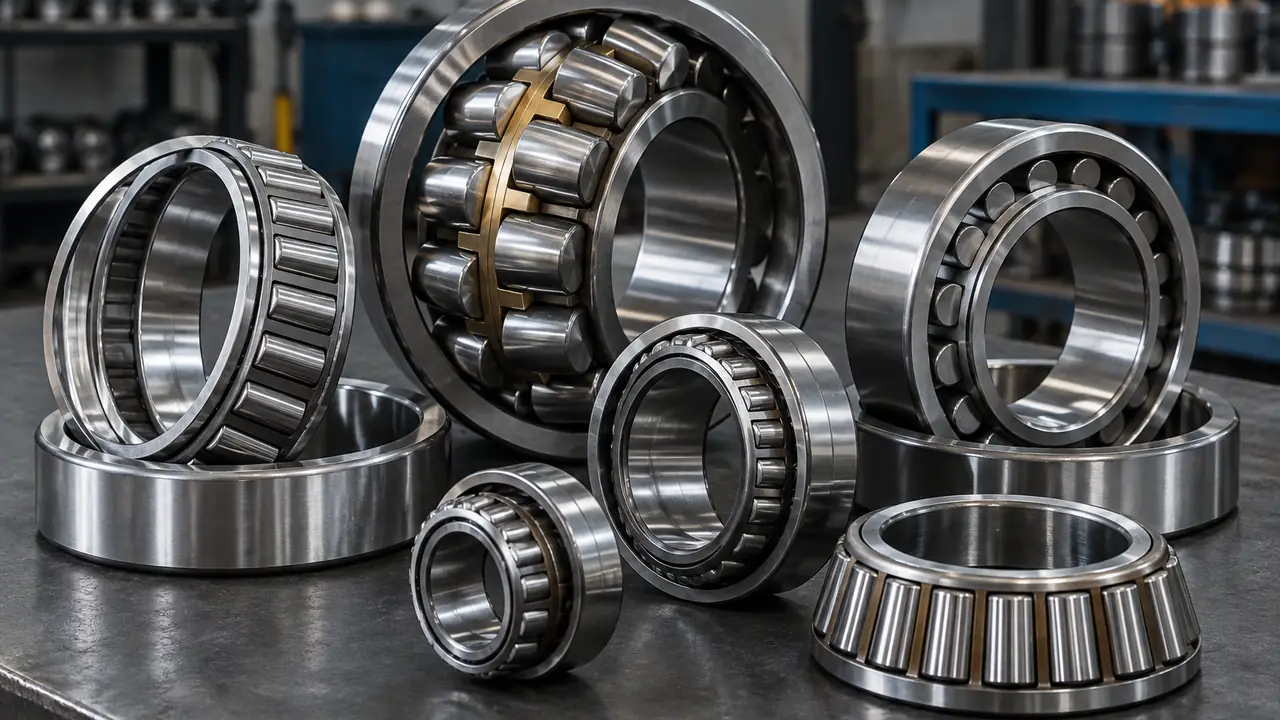
The five lines in this group differ in roller shape and in how the rollers are guided, and that decides which loads each can take. Load ratings and speed limits always come from the supplier datasheet for the exact designation; the desk does not quote generic numbers. For a wider overview of all families see bearing types explained and ball vs roller bearings.
The five roller bearing lines
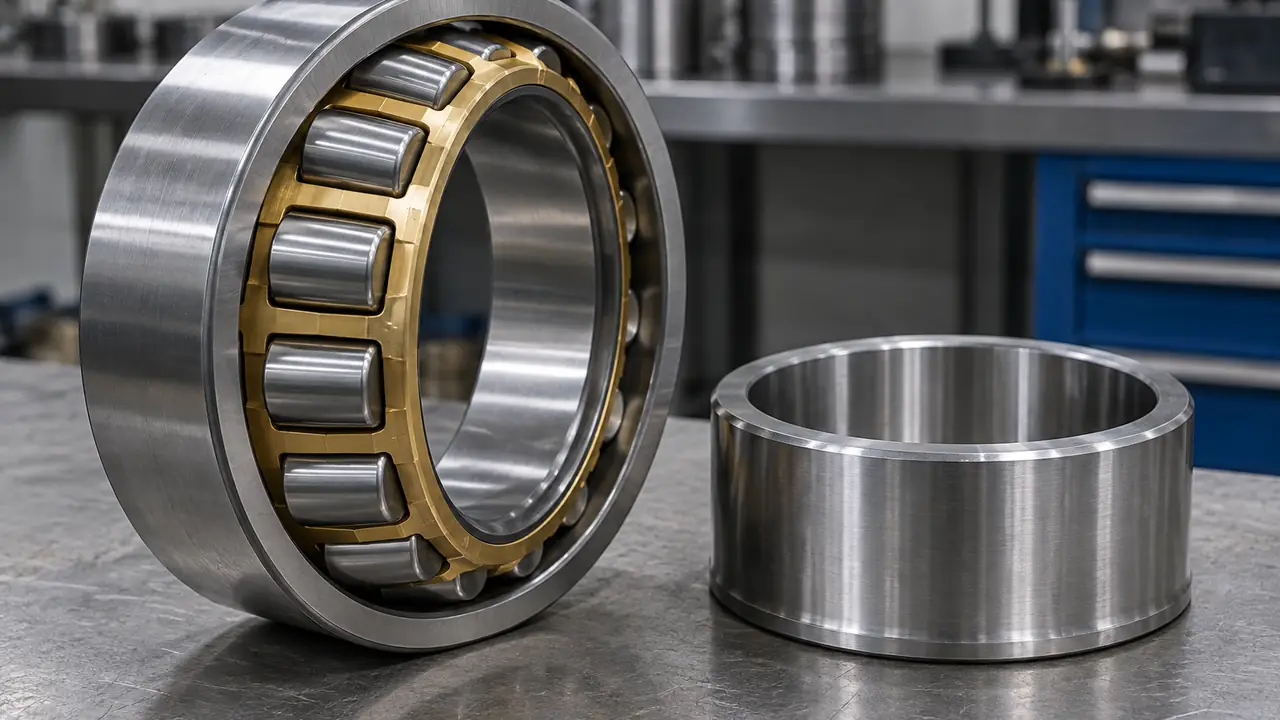
- Cylindrical roller bearings - the highest radial capacity for a given section among the non-spherical types, with separable rings. Designs NU, NJ, NUP and N differ in how they locate the shaft axially.
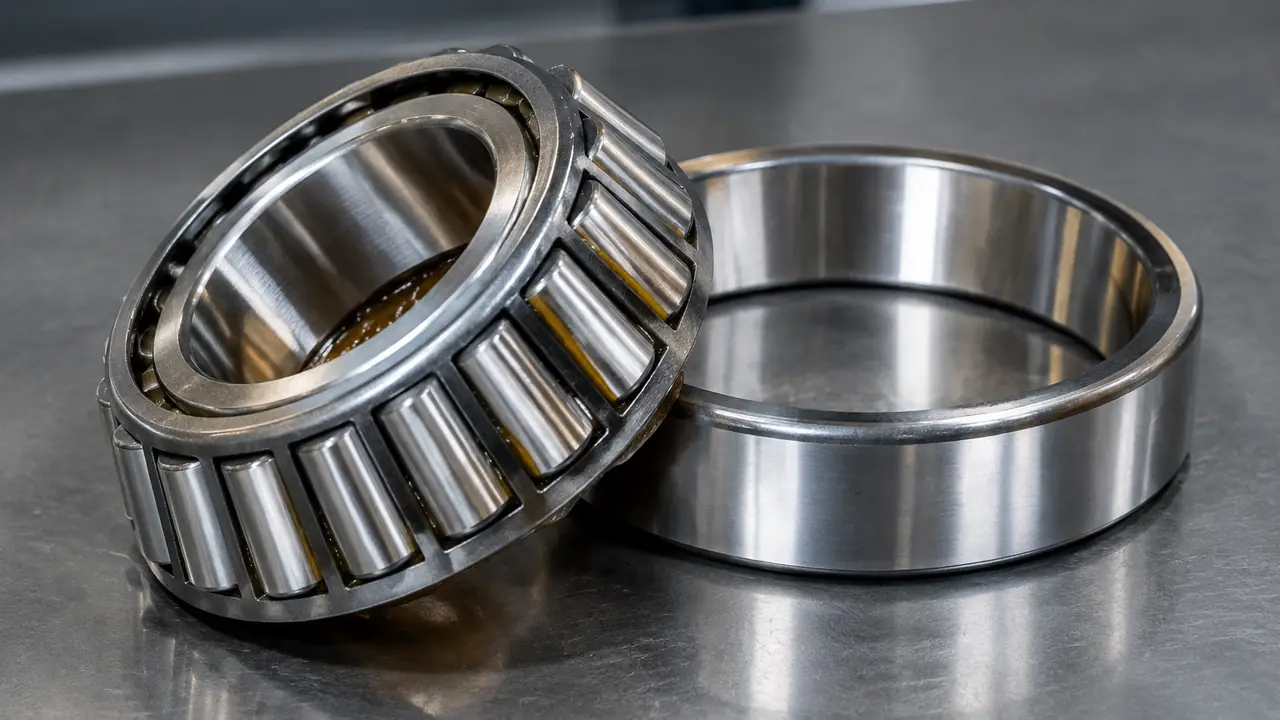
- Tapered roller bearings - take radial and one-direction axial load together, used in pairs. Wheel hubs, reducers and machine spindles.
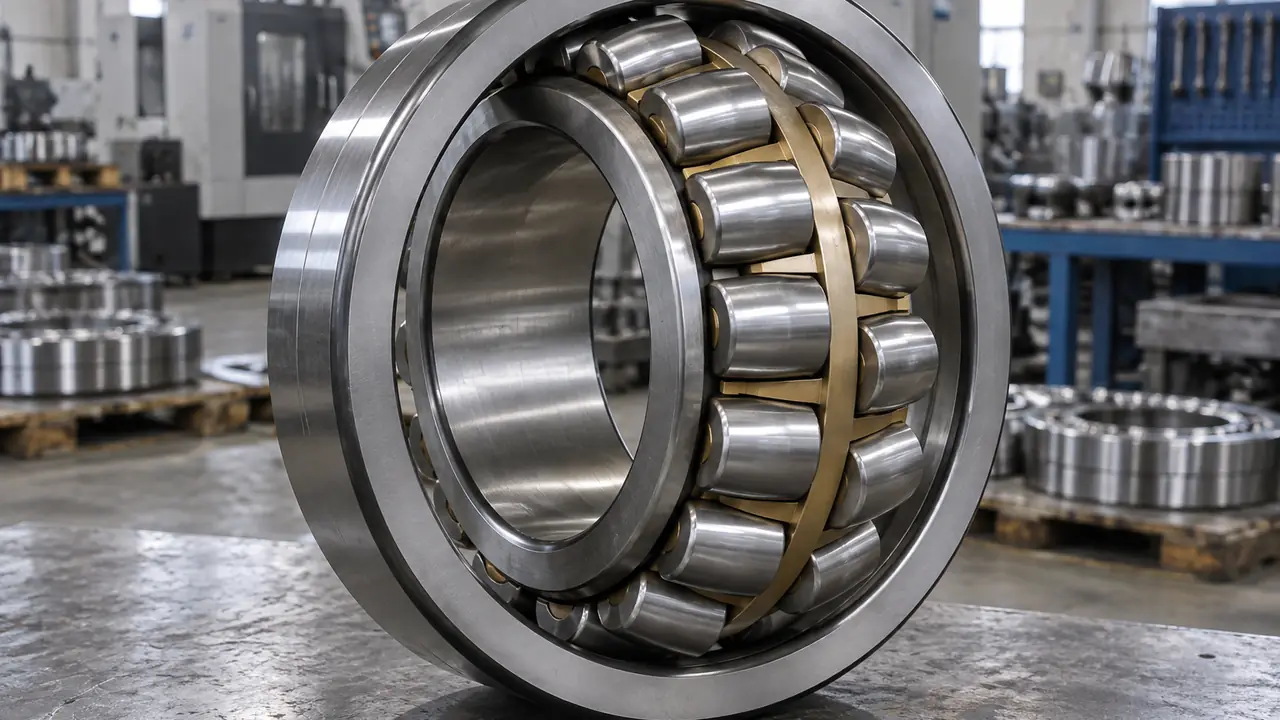
- Spherical roller bearings - two rows of barrel rollers in a spherical outer raceway. Heavy load plus tolerance of shaft deflection and misalignment.
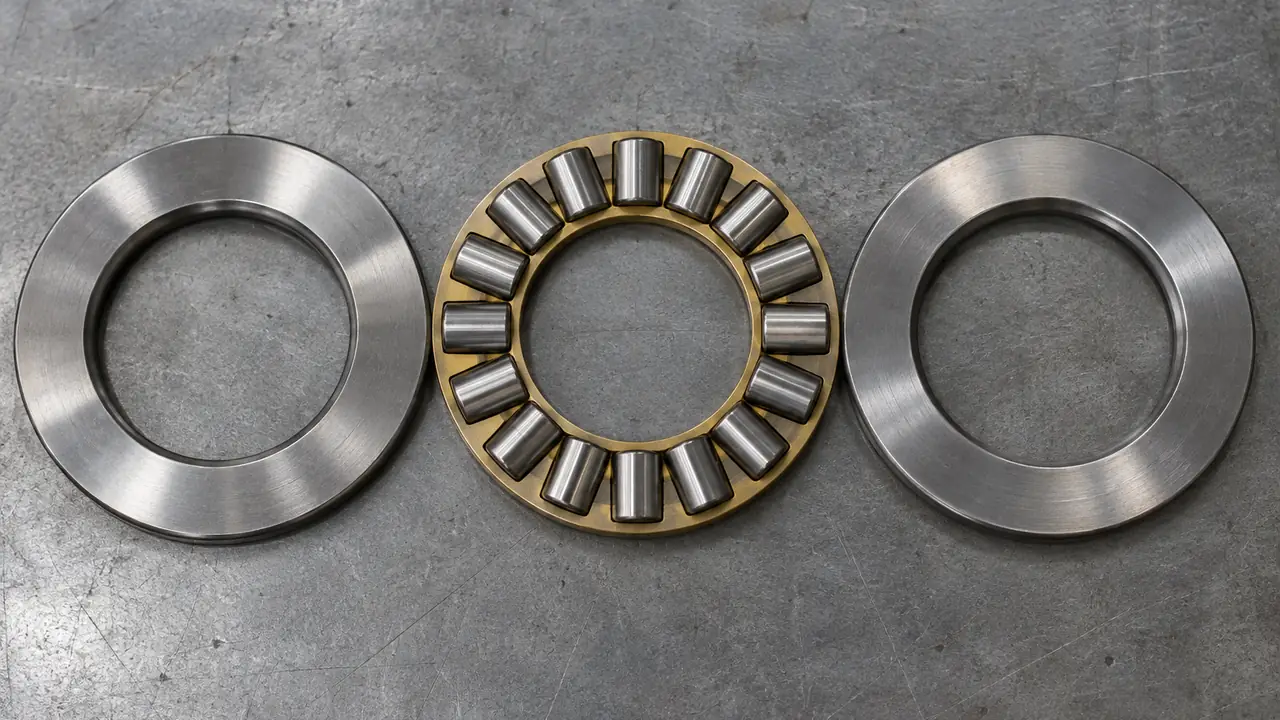
- Thrust roller bearings - axial load only, but a lot of it. Cylindrical, spherical and tapered thrust forms.
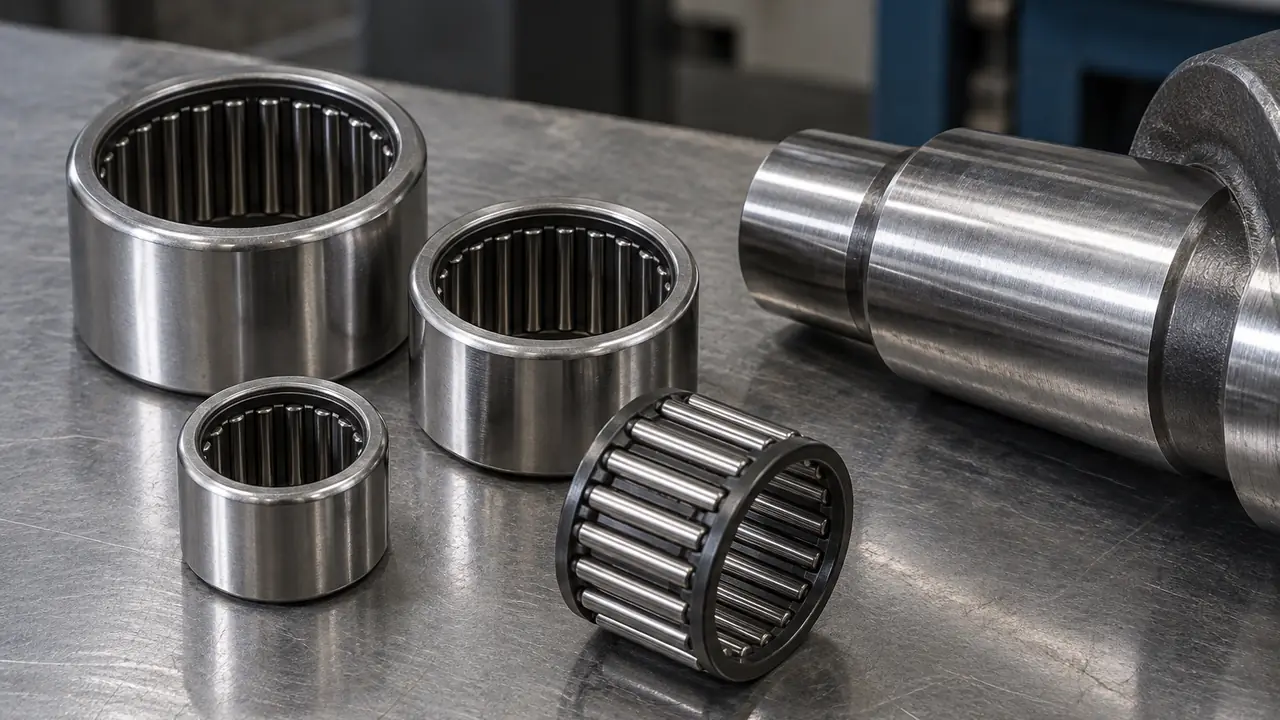
- Needle roller bearings - long thin rollers that give high capacity in a very small radial section.
Comparison at a glance
| Line | Radial load | Axial load | Misalignment | Typical series |
|---|---|---|---|---|
| Cylindrical | Very high | None (NU, N) or limited (NJ, NUP) | Very low | NU2, NU3, NJ2 |
| Tapered | High | One direction; pair for both | Low | 302, 303, 320, 322 |
| Spherical | Very high | Moderate, both directions | High | 222, 223, 230 |
| Thrust roller | None | Heavy, one direction | Cylindrical: none; spherical: yes | 811, 812, 293 |
| Needle | High for the section | None (separate thrust needle types exist) | Very low | HK, NK, NA49 |
The table is a rule-of-thumb ranking, not a rating. Two bearings of the same type can differ widely in capacity depending on size and series.
How to choose
- Sort the loads. Pure radial heavy load points to cylindrical or needle. Radial plus axial in one direction points to tapered. Heavy load with shaft bending or housing misalignment points to spherical.
- Decide how the shaft is located. A fixed position needs a bearing that handles axial load (tapered pair, NUP, NJ with a ring, spherical). A floating position can use NU or N, which let the shaft move axially inside the bearing.
- Check the space. If the radial height is tight, needle bearings win; if the width is tight, look at thin-section cylindrical or shorter series.
- Check speed and temperature. Cylindrical bearings with a good cage run fastest in this group; spherical and tapered are usually limited by friction heat.
- Check mounting. Tapered pairs need adjustment during assembly, spherical bearings often need adapter or withdrawal sleeves, and separable cylindrical rings need press fits on both rings.
Common mistakes when specifying roller bearings
Three errors recur in enquiries. The first is ordering by bore alone: a roller bearing with the right bore but a different series will not fit the housing. The second is leaving out the internal clearance group, which matters more for roller bearings than for sealed ball bearings because the interference fit on the inner ring uses up part of it. The third is ignoring how the pair or set is meant to be assembled; tapered sets and double-row types are often matched, and mixing parts from different batches can change the setting. State the full designation, clearance, tolerance class and the arrangement on the shaft in the first message.
Sourcing notes
Roller bearings are made in specialist plants rather than the high-volume small-ball plants of eastern Zhejiang. Industry sources describe Wafangdian in Liaoning as strong in large bearings including tapered rollers, and Luoyang in Henan as a centre for precision and large-section work, while Shandong and Jiangsu plants cover many mid-range sizes. China's rolling bearing exports in 2024 were reported by customs data at about 6.44 billion USD, with tapered and cylindrical roller bearings among the main categories. The desk matches the line and tolerance class to the plant that actually runs that product, not simply the nearest supplier. See industry clusters.
Roller bearings are heavy, so freight and packaging matter. Rust protection, wooden pallets and clear carton marking are covered under packaging and anti-rust. Typical reference ranges: 100-500 pieces per standard designation, stock samples in 3-7 working days, batch production 25-45 days, all confirmed in writing for each program. Send designations and quantities through the quote form.