
What the aftermarket asks for
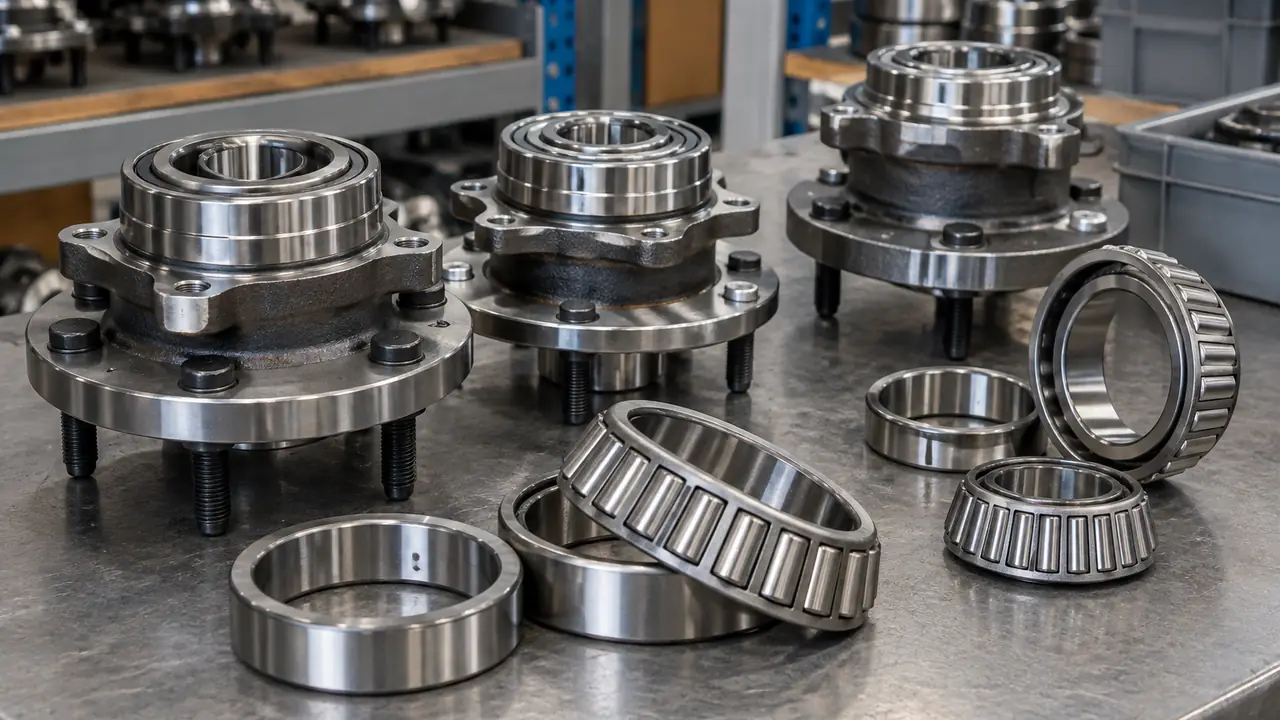
An aftermarket buyer sells to workshops and fleet owners who care about one thing first: that the part fits the vehicle and lasts a sensible time. The bearings involved are mostly wheel-end and drivetrain parts. They carry combined radial and axial load, sit close to heat and water, and are replaced in pairs or as kits. The difficulty for the sourcing side is rarely the bearing geometry. It is knowing which plant makes the right quality for the market, and having the fitment information that lets a workshop choose the correct part.
Rolvane works as a sourcing desk: it shortlists partner plants for each project, arranges inspection and organises export packing. It makes no claim about matching any vehicle manufacturer's part numbers, and it does not cross-reference to other bearing brands. Fitment tables are built from drawings and measured dimensions that you or the plant supply, and every cross-reference is checked by your own team against the vehicle data you rely on.
Parts the program covers
| Part | Bearing type | Notes for sourcing |
|---|---|---|
| Wheel hub bearing | Tapered roller or double-row angular contact | Sold as a bearing alone or as a hub unit with flange, sensor ring or ABS target; confirm mounting dimensions on the drawing |
| Tapered roller cone and cup sets | Tapered roller, metric and inch | Inch series have their own dimension logic and are not a rounded metric size; cone and cup should be matched as a set |
| Clutch release bearing | Angular contact or deep groove in a carrier | Often supplied with a housing or sleeve; carrier geometry must be on the drawing |
| Gearbox and differential bearings | Tapered roller, deep groove, cylindrical roller | Preload and shim stack matter on assembly |
| Repair kits | Bearing kits | Bearing, seal and retaining parts in one box, contents listed per vehicle application |
Inch cone-cup sets
Many trailer hubs, older trucks and imported vehicles use inch-dimension tapered roller bearings. Their boundary dimensions are given in inches, their designations use numeric pairs for cone and cup, and the angle and rib geometry differ from the metric series covered by ISO 355. The bearings are not "almost metric", and substituting one for the other by diameter alone leads to a loose or tight fit. The desk asks for the cone and cup numbers off the old part, measures bore, outside diameter and width in both millimetres and inches, and asks the plant for the drawing before samples are ordered. See tapered roller bearings for the metric series and how to measure a bearing.
Quality system and plant selection
IATF 16949 is the automotive quality management standard, and some of the partner plants hold it. The certificate belongs to the plant, not to Rolvane, and it is verified per project: the desk asks for the current certificate, checks the scope and the issuing body, and notes whether the plant would make your part under that scope. A certificate does not by itself prove that every item from the plant is better, so the desk also looks at the plant's process for the particular family, such as its heat treatment and grinding route for tapered rollers. For markets where certificates are not required by buyers, the desk may suggest a plant with sound practice but no automotive certificate, and states this openly. More on certifications and the factory audit.
Motorcycle and light commercial parts
Motorcycle wheel, steering head and gearbox positions use many of the same families in smaller sizes: sealed deep groove bearings in wheel hubs, tapered roller pairs in steering heads and angular contact types in some swing arms. Light commercial vehicles add heavier hub bearings and gearbox tapered sets. The approach is the same: drawings and measured dimensions first, then the plant that already makes the closest comparable part, then samples and a fitment check by your technicians.
Inspection, marking and packing
Aftermarket lots are usually inspected for dimensions, internal clearance or preload feel, noise on rotation, seal appearance and rust protection. Marking follows the approved sample, either the plant mark or your own private label. Boxes are printed per part with your own part number, and an export carton with a packing list is built around the fitment information you supply. Anti-rust oil and VCI bags are standard on loose steel parts; see packaging and anti-rust.
Typical reference ranges: 100-500 pieces per standard designation, 1,000-5,000 for private label, stock samples in 3-7 working days and batch production in 25-45 days. All are confirmed in writing for each program. Send part numbers, drawings or photos of the old part with quantities through the quote form.