
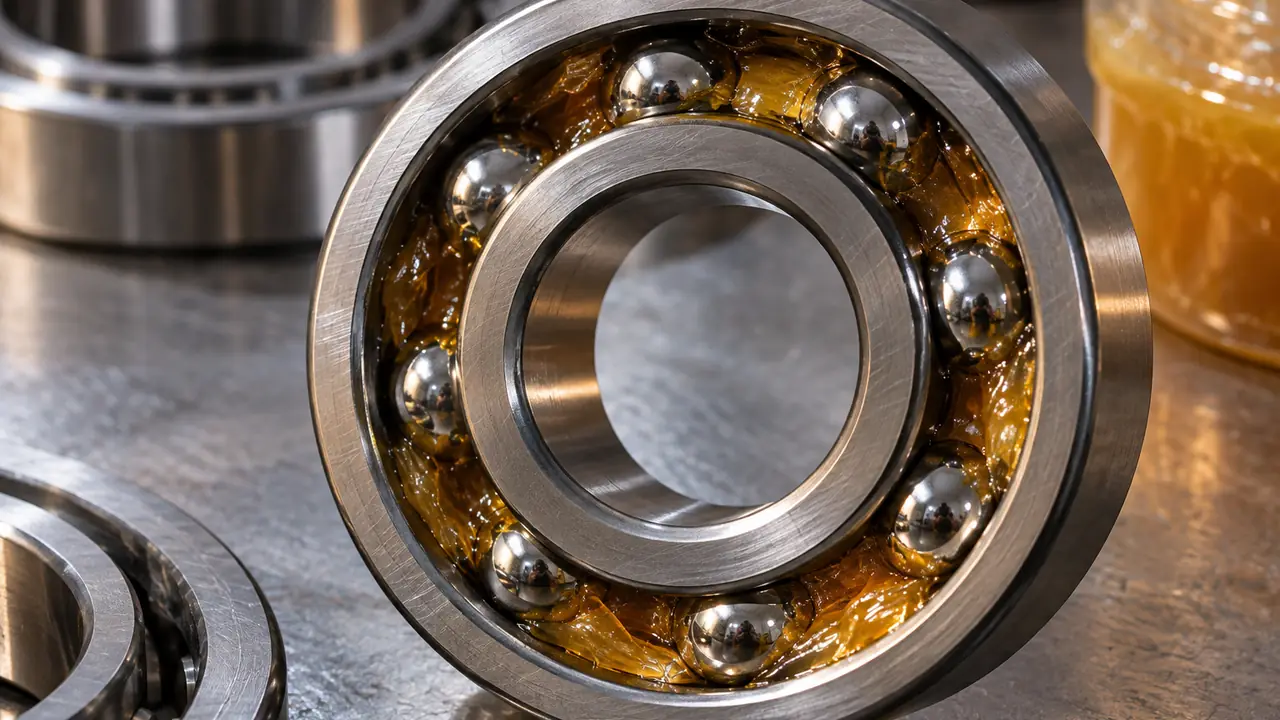
What food-grade means for a lubricant
Food-grade lubricants are formulated so that accidental, incidental contact with food does not create a hazard. In the widely used registration system for food-machinery lubricants, the category H1 covers lubricants that may touch food incidentally, such as drips from a bearing near a conveyor belt. The category H2 covers lubricants for machine parts with no possible contact with food, and H3 covers soluble oils used on trolley rails and hooks. A food-grade lubricant is not edible, and it is not a licence to over-lubricate; it simply limits the consequences of small leaks.
Registration depends on the ingredients and is granted to the lubricant product, not to the bearing. So the buying question is not whether a bearing is food-grade, but which lubricant is in the bearing, whether it has the registration your food-safety system requires, and whether the documents are available. Requirements differ by country, customer and audit scheme, so check yours.
Where H1 grease is normally required
- Conveyor bearings and housed units over open product, such as in bakeries, meat lines and packing halls.
- Mixers, fillers, slicers, and bottling lines where bearings sit beside the product zone.
- Pumps and valves in dairy, juice and beverage lines.
- Packaging machinery that handles food or food containers.
Bearings in motors and gearboxes outside the product zone often use ordinary lubricants, but many plants prefer a single food-grade product for everything to avoid mistakes in the maintenance routine. The plant's hazard analysis decides.
How food-grade grease performs
Food-grade greases use approved base oils and thickeners, often white mineral oil, PAO or synthetic esters, with thickeners such as aluminium complex, calcium sulphonate complex or polyurea. Additives are limited to approved ones, so they are sometimes weaker in extreme pressure and anti-wear performance than their industrial counterparts, although modern formulations narrow the gap.
| Requirement | What to look for |
|---|---|
| Washdown and steam | Strong water resistance; sulphonate or aluminium complex thickeners are common |
| Cold rooms and freezers | Low pumping stiffness at low temperature, synthetic base oil |
| Heat in ovens and fryers | High-temperature synthetic food-grade grease; shorter intervals |
| Corrosion protection | Rust inhibitors approved for the category |
| Compatibility | Check seals (NBR, FKM, EPDM) and the previous grease before changing |
The bearing around the grease
A good lubricant will not protect a bearing that corrodes. In washdown zones, think of the whole assembly:
- Material: stainless steel such as 440C or AISI 304-based units resists water and cleaning chemicals; see stainless vs chrome steel bearings. Chrome steel bearings with coatings or plated housings are an economical step in moderate zones.
- Seals: contact seals keep water out and grease in; they should be made from materials that survive cleaning agents and temperature cycles. Detail on materials is in bearing seals.
- Housing: stainless or thermoplastic housings with smooth, crevice-free shapes are easier to clean than rough cast iron pillow blocks. Look at bearing housings.
- Drainage: design so that water does not collect around the bearing and seal. Water standing on a seal is a common source of failure.
Changing over from industrial grease
Switching a plant to food-grade lubricants is a project, not a swap of tubs. A tidy changeover follows a sequence that most lubrication suppliers describe in similar terms:
- List every lubrication point in and near the product zone, with bearing type, current grease and relubrication method.
- Choose the food-grade grease for each duty: general washdown, cold, hot, or high-load. Two or three products usually cover a whole plant.
- Check compatibility with seal materials. Some synthetic esters swell certain rubbers; the supplier can confirm.
- Purge the old grease with several shots of the new one at each point, and record the date and quantity. For sealed bearings that cannot be purged, replace the bearing at the next planned stop.
- Re-label grease guns, fittings and storage with the new product and train the maintenance team.
A partial changeover leaves a mixture in the housing for months, which is exactly the situation to avoid. Keep the changeover record with the lubrication plan so that auditors and new technicians can see which points have been converted and when. If purging is impractical, schedule a bearing replacement at the next shutdown instead.
Common mistakes in food plants
- Assuming a stainless bearing is automatically food-grade. The metal resists corrosion, but the lubricant and seal material decide hygiene.
- Over-greasing to stop water. Too much grease leaks out onto belts and defeats the point of the design. Add small shots and wipe the excess.
- Using one grease gun for everything. Cross-contamination between food-grade and industrial grease invalidates the registration status of the point.
- Ignoring the cold. Freezers stiffen standard greases, raising torque and motor current. Choose a grade tested at low temperature.
- Forgetting the documents. Auditors ask for the grease data sheet and registration; missing paperwork can cause a finding even if the grease is correct.
Washdown practice
High-pressure, hot-water washdown pushes water towards seal lips. Plants reduce damage by pointing spray away from bearing seals where possible, by using covers or deflectors, and by relubricating immediately after washdown. Fresh grease pushes out moisture that has entered; many programs regrease right after cleaning, in small measured shots. Do not over-fill; excess grease dripping from a bearing defeats the purpose of food-grade design. Intervals and quantities follow the methods in bearing relubrication intervals.
Keep a record of which lubricants are approved in the plant, label grease guns by colour, and keep them separate from industrial greases. Mix-ups are common, and a single wrong gun can contaminate a line's lubricant system.
Documents and sourcing
Ask the lubricant supplier for the registration letter, safety data sheet and technical data sheet, and keep them in the plant file. When you buy pre-greased bearings or housed units with food-grade grease, ask the partner plant which grease is used and what documents are available for it. The desk coordinates these requests: the grease, the minimum quantity and the lead time are confirmed in writing for each program, and certificates are verified per project. Include the washdown conditions, temperature and the material you expect in your quote request.